
Grace Hui for INCENTRE
In an age where spiritual advice is only a click away, finding a path that is both authentic and grounded can feel surprisingly difficult. With countless teachers, practices, retreats, and philosophies competing for our attention, how do we separate genuine wisdom from clever marketing or fleeting trends?
While there are many teachers and traditions that encourage discernment, one resource I recently came across offers a particularly clear and practical framework for evaluating any spiritual path. This article explores why discernment has become one of the most important spiritual practices of our time and reflects on the practical insights shared in A Guide to Finding Your Spiritual Path, a video by Sovereign Ipsissimus Dave Lanyon, a lineage holder within the Modern Mystery School.
Whether you are taking your first steps on a spiritual journey, returning to it after time away, or reassessing a path you have followed for years, these principles offer a thoughtful framework for navigating today's spiritual landscape with greater clarity, confidence, and personal responsibility.
Before you choose a path
Before committing to any teacher, community, or practice, it can be helpful to pause and ask yourself a few simple questions:
What am I truly searching for?
Am I seeking healing, belonging, knowledge, purpose, or certainty?
Am I making this decision from inspiration or from fear?
Does this path encourage me to become more responsible for my own life, or more dependent on someone else?
Do I feel free to question, reflect, and move at my own pace?
There are no perfect answers to these questions. Their purpose is simply to help you become aware of your own motivations before someone else begins telling you what they think you need. The more honest you can be with yourself, the easier it becomes to recognise a path that genuinely supports your growth.
Discernment isn't about becoming suspicious of every teacher or every spiritual tradition. Rather, it is about developing enough self-awareness to recognise what genuinely serves your growth. The healthiest spiritual paths rarely ask you to abandon your own wisdom—they help you strengthen it.
There comes a point in many people's lives when success, routine, or even comfort no longer feels like enough. Despite having careers, relationships, hobbies, or material security, there can still be a quiet feeling that something is missing. It isn't necessarily unhappiness, but rather an inner knowing that there is another dimension to life waiting to be explored.
For some, this feeling arrives after experiencing loss or heartbreak. For others, it emerges during a period of personal growth, after achieving a long-term goal, or simply as they begin asking deeper questions about why they are here and what truly gives life meaning. Sometimes it arises after reaching the very goal they believed would finally make them happy, only to discover an unexpected sense of emptiness.
Whatever brings us to that point, the search for purpose is one of the most universal human experiences.
Throughout history, people have sought answers through philosophy, religion, meditation, mystery traditions, and personal spiritual practice. Today, however, that search takes place in an entirely different environment. We are surrounded by an endless stream of information, opinions, and promises, all competing for our attention.
The digital age has made spiritual knowledge more accessible than ever before. With just a few clicks, anyone can access thousands of books, podcasts, online courses, retreats, workshops, teachers, and communities from every corner of the world.
While this abundance is undoubtedly a gift, it also presents a unique challenge.

Information Overload and Spiritual Confusion
The internet has democratised spiritual knowledge, but it has also created a marketplace where almost every philosophy claims to hold the missing piece of the puzzle.
One video tells you manifestation is the answer.
The next insists shadow work is essential.
Another says inner child work is the missing piece.
Someone else promotes plant medicine as the fastest route to enlightenment.
Elsewhere, you'll hear that astrology, breathwork, energy healing, meditation, crystals, ancient initiations, or mindset coaching hold the key.
Many of these practices contain genuine value. Some have transformed countless lives. Others simply resonate with different people at different stages of their journey. Unfortunately, some may also be misleading or even exploitative, causing emotional, psychological, or financial harm.
The challenge is that when everything claims to be the answer, discernment becomes more important than ever.
Without discernment, it becomes incredibly easy to jump from one teaching to another, constantly chasing the next breakthrough while never developing the consistency required for lasting transformation.
Many sincere seekers eventually experience what could be described as "spiritual fatigue." They consume endless content, attend workshops, purchase books, follow numerous teachers, yet somehow still feel as though they are standing in exactly the same place, running on a never-ending hamster wheel of seminars, workshops, and self-help content.
Knowledge alone rarely transforms us. It is the consistent application of wisdom—through our choices, habits, relationships, and daily actions—that creates lasting change. Spiritual growth is not measured by how much we know, but by who we become.
Why We Become Vulnerable While Searching
Periods of spiritual searching often coincide with major life transitions.
Perhaps a relationship has ended.
A loved one has passed away.
A career no longer feels fulfilling.
A health challenge changes your perspective.
Or perhaps life simply whispers that there is something more.
These moments can be profoundly beautiful because they open us to new possibilities. Yet they also make us emotionally vulnerable.
When people are hurting or searching for certainty, they naturally want someone to provide answers. We long for reassurance that everything will be okay and that someone else already knows the way forward.
It is worth remembering that intelligent, thoughtful people can still find themselves in unhealthy spiritual environments. This is rarely because they lack intelligence. More often, it is because they are sincerely seeking hope, healing, belonging, or meaning during a vulnerable period of life.
When someone promises certainty, instant transformation, or simple answers to life's greatest questions, it can feel incredibly attractive. This doesn't mean every charismatic teacher or close-knit community is unhealthy. Rather, it reminds us that our deepest longings can sometimes cloud our discernment.
This is precisely why discernment matters.
The choices we make during these periods can significantly influence the direction of our lives, for better or worse. The communities we join, the teachers we trust, and the philosophies we embrace all shape how we understand ourselves and interact with the world.
A healthy spiritual path should never exploit vulnerability. Instead, it should empower people to become stronger, wiser, and increasingly capable of thinking for themselves.
A Guide to Discernment
Recognising the need for practical guidance, Sovereign Ipsissimus Dave Lanyon, a lineage holder within the Modern Mystery School, created a video titled A Guide to Finding Your Spiritual Path.
Rather than focusing on convincing viewers to adopt a particular belief system, the guide offers practical criteria that can help anyone evaluate a spiritual community or teacher.
What makes this approach particularly refreshing is that it encourages independent thinking.
Instead of asking people to suspend their judgement, it provides tools to strengthen it.
For anyone exploring spirituality—regardless of tradition—these principles can serve as useful questions to ask before making significant commitments.

Green Flag One: A Healthy Path Encourages Critical Thinking
One of the strongest indicators of a healthy spiritual environment is that questions are welcomed rather than discouraged.
Authentic teachers understand that sincere questions are signs of engagement, not rebellion.
Real learning requires curiosity.
If asking difficult questions is viewed as disrespectful or evidence of spiritual weakness, this should prompt careful reflection.
Healthy communities recognise that every individual arrives with different experiences, beliefs, and perspectives. Understanding develops through dialogue, contemplation, and personal experience—not blind acceptance.
Critical thinking and spirituality are not opposites.
In fact, genuine wisdom often grows stronger when it is examined thoughtfully.
Green Flag Two: Personal Wellbeing Comes First
A meaningful spiritual journey should enrich your life, not replace it.
Healthy communities encourage people to take responsibility for their physical health, mental wellbeing, financial stability, relationships, and family commitments.
Spiritual practice should help someone become more present, more compassionate, more emotionally balanced, and more responsible in everyday life.
It should never encourage neglect of practical responsibilities in pursuit of lofty ideals.
If a path consistently damages relationships, creates unnecessary dependency, or discourages independent decision-making, it is worth asking whether it truly serves the individual's highest good.
True spirituality should integrate with life rather than separate us from it.
Green Flag Three: Freedom Is Always Respected
One of the most reassuring ideas presented in Dave Lanyon's guide is the importance of free will.
Healthy communities recognise that spiritual growth cannot be forced.
Every individual must choose their own pace.
People should feel free to explore, pause, deepen their involvement, or leave entirely without fear, manipulation, or guilt.
Authentic teachers understand that growth born from freedom is always stronger than growth born from pressure or force.
When people feel safe to make their own choices, they also take greater ownership of their personal development.
Green Flag Four: Humility and Humour
Perhaps one of the more unexpected insights from the guide is the value of humour.
Many people associate spirituality with solemnity, seriousness, or perfection.
Yet humour can be one of the healthiest signs of emotional maturity.
The ability to laugh at ourselves reminds us that growth is an ongoing process.
It softens the ego.
It reduces fear.
It helps us avoid becoming attached to identities, titles, or the illusion of having all the answers.
Communities that encourage joy alongside discipline often create healthier environments than those built entirely around intensity.
Green Flag Five: Authentic Teachers Continue to Learn
Healthy teachers don't pretend to know everything. They remain students themselves, recognising that learning never truly ends. They continue refining their understanding, questioning their assumptions, and remaining open to deeper insight.
Humility is often one of the greatest signs of genuine wisdom. Teachers who admit they don't have every answer are often the ones who create the safest environments for others to grow, because they encourage discovery rather than demanding certainty.
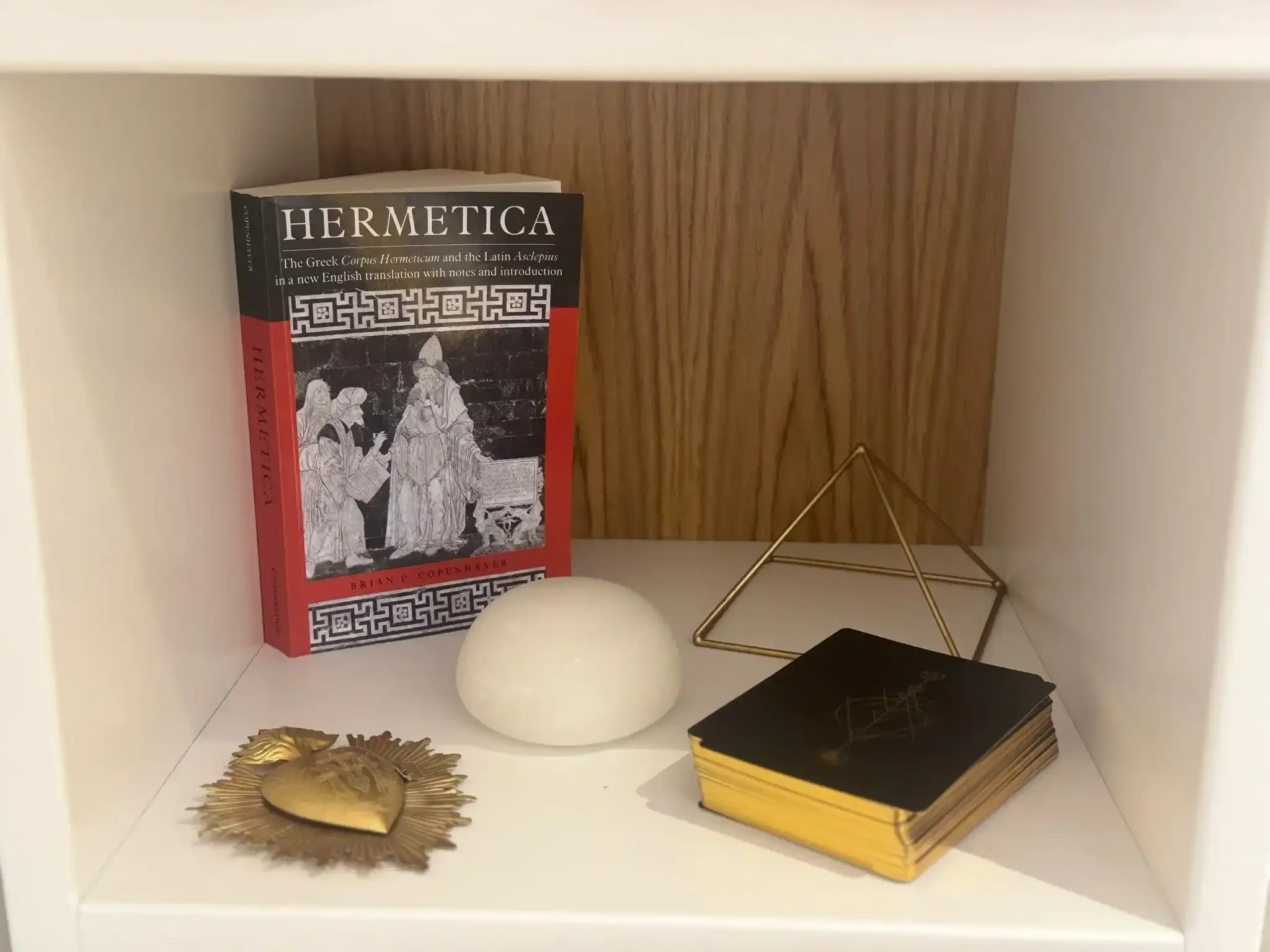
There Is No Final Destination
One of the most inspiring messages in the guide is that authentic spiritual development never truly ends.
There is no ultimate certificate that declares someone completely enlightened.
No finish line where learning stops.
Instead, growth continues throughout life.
Every challenge becomes another opportunity to develop greater wisdom, compassion, courage, and responsibility.
Rather than placing leaders on unreachable pedestals, healthy traditions recognise that wisdom is cultivated through commitment and practice.
The teacher simply walks a little further ahead on the same path.
A Community Should Empower, Not Control
At its best, a spiritual community functions much like an excellent coach.
A coach cannot do the work for you.
They cannot build your strength, develop your discipline, or make your choices.
What they can do is provide guidance, encouragement, accountability, and perspective.
The same principle applies spiritually.
Healthy communities remind people of their own potential rather than convincing them they are powerless without the group.
Their role is to help individuals become increasingly self-aware, self-responsible, and capable of contributing positively to the world around them.
Discernment Is an Ongoing Practice
Perhaps the greatest lesson is that discernment itself is a spiritual practice.
It asks us to slow down.
To observe.
To question.
To listen both to our intuition and to our reason.
It reminds us that extraordinary claims deserve thoughtful examination, and that genuine growth rarely depends on quick fixes or dramatic promises.
The strongest spiritual foundations are often built quietly through consistent practice, honest self-reflection, meaningful service, and the willingness to keep learning.
Final Thoughts
We live in an age of unprecedented access to spiritual knowledge, yet perhaps never before has discernment been so essential.
There are many sincere teachers, authentic traditions, and supportive communities doing valuable work. There are also environments that may not be the right fit for every individual.
The responsibility—and the privilege—belongs to each of us to choose wisely.
A Guide to Finding Your Spiritual Path offers a thoughtful reminder that the healthiest spiritual journeys encourage freedom, responsibility, critical thinking, humility, and genuine personal growth.
Whether or not you ultimately resonate with the ideas presented, the principles themselves offer a valuable framework for evaluating any spiritual path.
The right spiritual path should never ask you to stop thinking, stop questioning, or stop growing. Instead, it should help you become more grounded, more compassionate, more responsible, and more fully yourself.
Because ultimately, the purpose of authentic spirituality is not to make us dependent on someone else's light. It is to help us recognise, cultivate, and express the light that already exists within ourselves.
Perhaps the answers we seek are not found by endlessly searching outside ourselves, but by learning to quiet the noise long enough to hear the wisdom that has always been there.
The journey may begin with finding the right teacher, book, or community—but its true destination is remembering who we are and becoming the fullest expression of that truth in our everyday lives.
In the end, perhaps finding your spiritual path is not about discovering something outside of yourself at all. Perhaps it is about removing the noise that has always prevented you from recognising the wisdom, strength, and light that have quietly been waiting within you.
In a world filled with endless voices telling us who to become, perhaps the greatest spiritual practice is learning to listen to the quiet voice within.
A genuine path doesn't replace that voice—it helps you hear it more clearly.
And perhaps that has been the destination all along.
